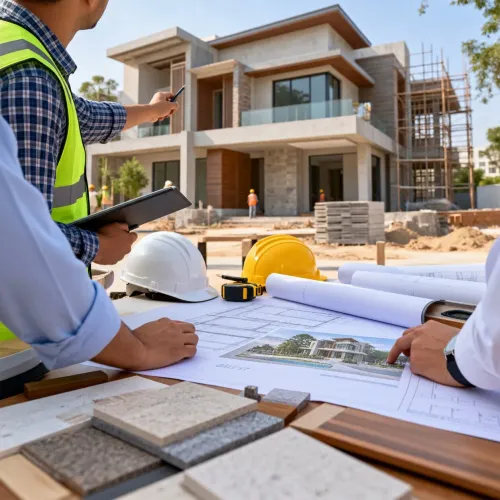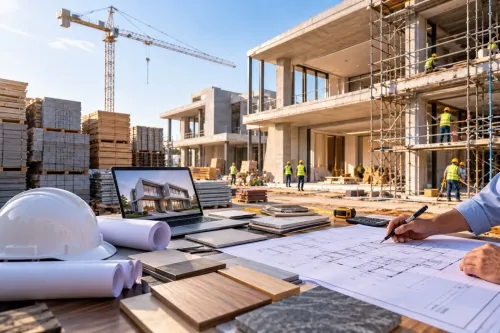

Property owners often discover that managing a building involves far more than appointing a mason and purchasing materials. Drawings, civil work, electrical systems, plumbing, fabrication, finishes and multiple contractors need to come together in the right sequence. This is why Trusted Builders for End-to-End Solutions are increasingly evaluated on their ability to coordinate the entire project rather than complete isolated activities.
The advantage lies in creating continuity from planning to handover.
Planning Should Establish the Project Framework
Before site activity accelerates, important decisions should be documented.
These may include the project scope, drawings, specifications, budget framework and expected milestones.
A builder providing comprehensive services should understand how each of these elements affects execution.
Incomplete planning at the beginning often leads to repeated decisions during construction, which can disrupt both schedule and cost.
Civil Work Forms the Core
Foundations, structural elements, masonry and related civil activities form the physical basis of the project.
The builder should coordinate these works according to approved architectural and structural information.
Supervision is especially important at stages where mistakes become difficult to correct after concrete placement or finishing.
Building Services Need Integration
Electrical and plumbing work cannot simply be added after civil construction is finished.
Conduits, sleeves, pipe routes, equipment points and service openings often interact with structural and architectural elements.
Trusted Builders for End-to-End Solutions should establish coordination between these disciplines early enough to minimize cutting and modification later.
Procurement Needs a Timeline
A project schedule can be disrupted when critical materials are ordered too late.
An end-to-end builder should connect procurement with the construction programme.
Items with longer manufacturing or delivery periods may need decisions well in advance of installation.
This becomes particularly important for custom fabrication, specialized equipment and selected finishing materials.
Progress Reporting Creates Accountability
Clients should have a reasonable understanding of what is happening on their project.
Progress communication may include completed activities, upcoming work, pending approvals and decisions requiring client input.
Regular reporting is particularly useful for owners who cannot visit the site every day.
Kashi Prayag Constructions provides construction and project-related services across multiple disciplines, supporting a coordinated approach to project execution.
Finishing Requires the Same Attention as Structure
Quality should not decline as a project approaches completion.
Flooring, painting, fixtures, joinery and final service installations need systematic checking.
Snag identification before handover helps ensure incomplete or defective items are recorded and addressed.
Handover Is a Process
A building is not necessarily ready simply because major construction has stopped.
Final checks may involve cleaning, testing services, completing pending items and confirming that agreed work has been executed.
Documentation requirements should also be identified according to the project.
End-to-End Delivery Is About Responsibility
For developers, businesses and property owners in Devanahalli, Bangalore, integrated construction can reduce the complexity of coordinating multiple independent parties.
The strongest advantage is not simply convenience. It is having a clearer chain of responsibility across planning, civil construction, services and finishing.
When evaluating builders, clients should therefore look beyond the promise of complete construction and examine how the company actually coordinates each stage. That management capability is what turns an end-to-end offering into a practical project solution.
Keywords