
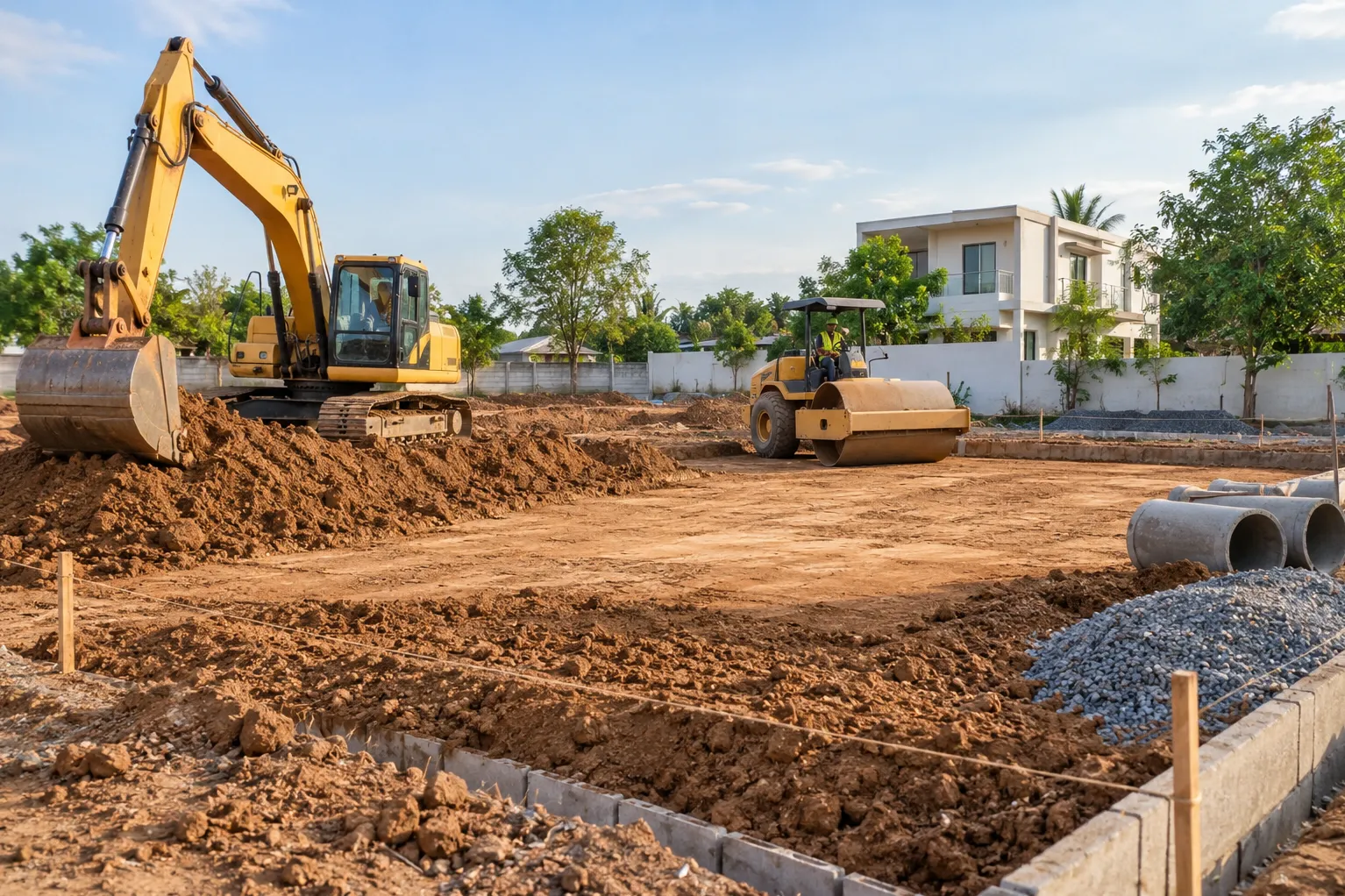
Buying a residential plot is only the beginning of building a home. Before foundation work starts, the land may require clearing, levelling, filling, excavation, drainage planning and access preparation. A capable Residential Site Development Contractor coordinates these activities so the plot is ready for the construction that follows.
Understanding this stage can help property owners avoid decisions that create unnecessary expense later.
Start With the Existing Site Condition
Every plot is different.
Some sites are relatively level, while others have significant variations. There may be vegetation, old structures, debris or soil that needs further assessment.
The contractor should first understand:
- Plot boundaries
- Existing levels
- Road relationship
- Proposed building position
- Access conditions
- Drainage direction
- Utility locations
- Foundation requirements
These factors influence how the land should be developed.
Clearing Should Be Controlled
Site clearing may involve removing vegetation, debris and unwanted material.
However, clearing should not become uncontrolled excavation. Existing levels and relevant site features should be understood before earth-moving work begins.
Removing too much soil can create unnecessary filling requirements later.
Filling and Compaction Need Attention
Where levels need to be raised, suitable filling material may be required.
Placing large quantities of material without appropriate compaction can create future settlement problems. The method should reflect engineering requirements and the intended use of the area.
External driveways, landscaped zones and building-related areas may have different preparation requirements.
Drainage Planning Protects the Property
Residential sites need a logical approach to rainwater movement.
The final site should not unintentionally direct water toward the building. Road levels and neighbouring plots also need consideration.
This is particularly relevant to properties in Devanahalli, Bangalore, where development conditions can differ significantly between established layouts and emerging residential areas.
Construction Access Should Be Practical
A home requires regular delivery of reinforcement, cement, blocks, aggregates and other materials.
The Residential Site Development Contractor should consider how vehicles and workers will safely access the site during construction.
Poor temporary access can increase handling requirements and slow progress.
Underground Services Need Early Coordination
Some external services may need to pass beneath areas that will later be paved or landscaped.
Planning service routes early can reduce the need to disturb completed work.
This may include water, drainage and electrical infrastructure depending on the project.
Site Development Should Match the Building Plan
The most effective approach is to connect land preparation directly with the proposed construction.
Kashi Prayag Constructions supports civil and site-related construction activities, allowing site development decisions to be coordinated with subsequent building requirements.
For example, excavation should reflect structural foundation information. Finished levels should consider entrance positions. Drainage should work with external development.
Treating each activity independently increases the possibility of rework.
Good Preparation Makes Later Construction Easier
Site development is rarely the most visually exciting part of building a home, but it has a major influence on everything that follows.
A properly prepared residential plot supports organized foundation work, material movement, drainage and external development.
Property owners in Devanahalli, Bangalore, should therefore evaluate site preparation as an important construction phase in its own right. A planned approach at the beginning can eliminate many avoidable problems once the building starts taking shape.
Keywords